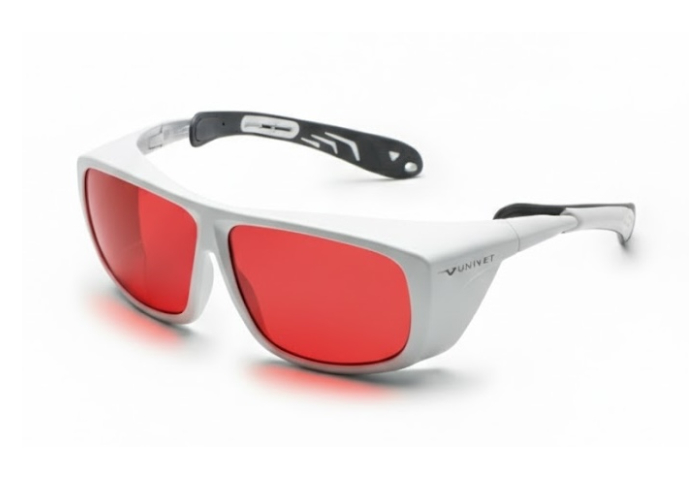
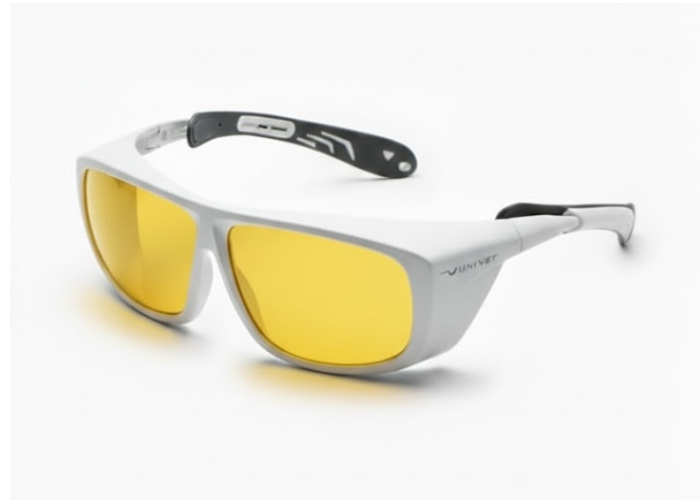
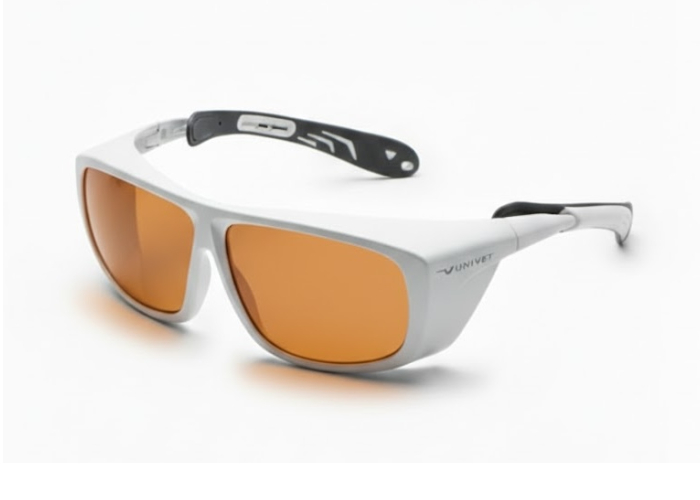
Step 1
Identification of Laser Type (What technology generates the beam?)
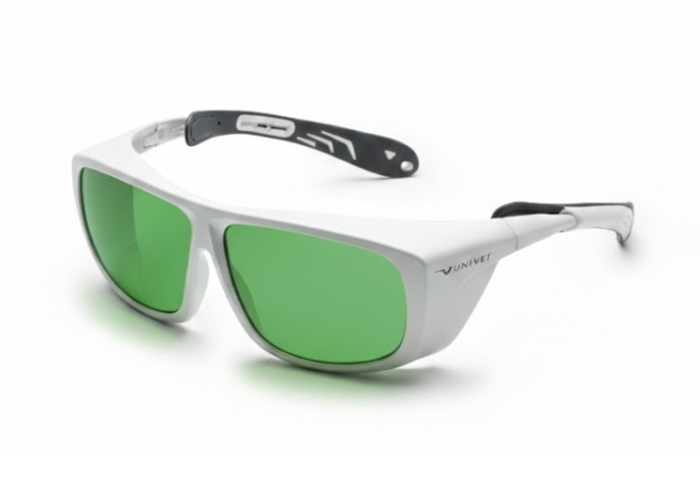
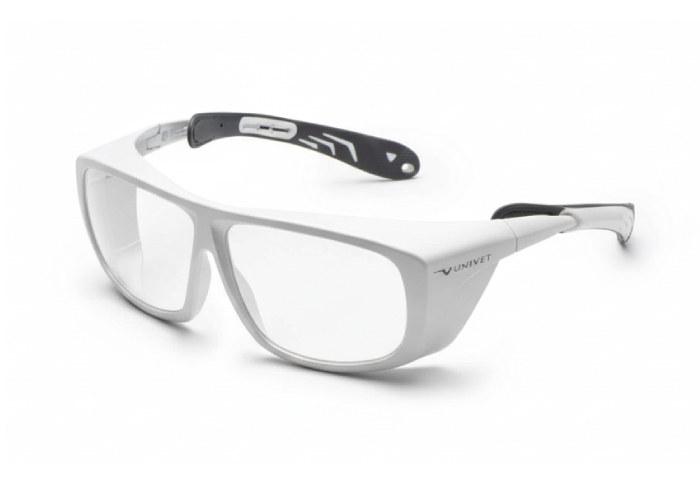
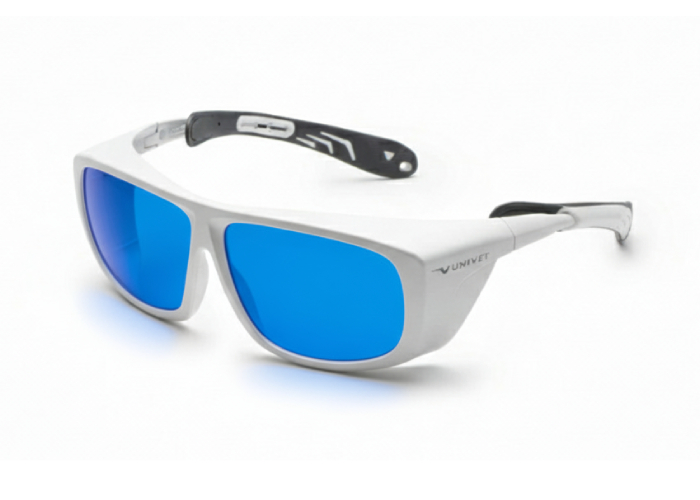
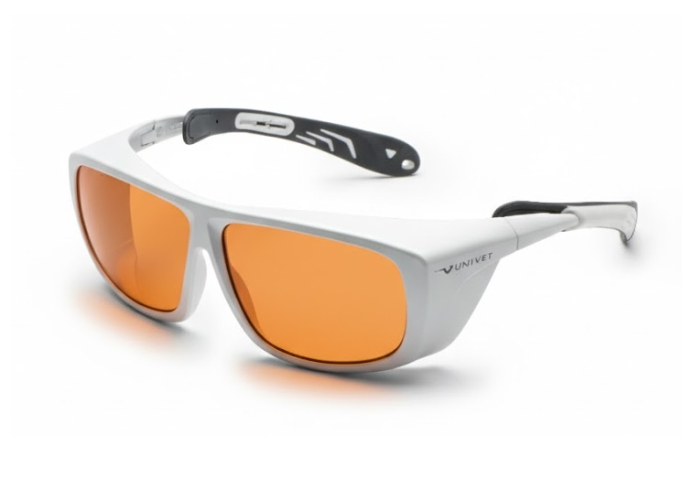
Choosing the right laser safety glasses doesn't have to be a complex process full of leafing through long technical sheets. The most basic and important information is finding out what type of laser you are using.
The type of laser directly determines, above all, the wavelength of the laser radiation. This information will immediately help us narrow down the selection to the correct category of safety filters and exclude those that would provide no protection for your device.
Where can you easily find this key information?
Look at:
- Rating Plate: Usually located on the back or side of the device itself, or on the laser source module.
- Technical Manual: Or in the handover protocol or declaration of conformity (CE) that was supplied with the machine.
- Machine or Source Manufacturer Specification: Look in the documentation of the most common manufacturers (for example, IPG Photonics, Trumpf, Coherent, Epilog, Synrad, SPI Lasers, Raycus, MaxPhotonics, or JPT).
- Model Designation or Machine Name: The technology is often stated directly in the name. Look for keywords like "Fiber Laser," "CO₂ Laser," "Diode Laser," "Nd:YAG," or "UV Laser."
Select protection according to laser type
Step 2
Operating Mode and Power (What do you use the laser for?)
The operating mode and optical power of the laser determine how strong the protection itself must be (so-called optical density and the corresponding LB protection level according to standards). Simply put: the filter must withstand either long-term thermal load or a huge instantaneous burst of energy.
Laser systems operate in two basic modes:
Pulsed Lasers (e.g., Q-switch, nanosecond, picosecond, femtosecond)
They release energy in very short but extremely intense flashes (pulses). Even a laser with low average power can have huge peak power that requires specific and very robust protection.
Continuous Lasers (CW – Continuous Wave)
They emit a continuous beam. Their strength is given in average power (Watts – W).
Don't know the exact parameters?
Choose according to laser application
Detailed technical data (such as pulse duration in nanoseconds or peak energy) can be difficult to find in manuals. Fortunately, individual applications are directly linked to typical powers and risks. Find your activity in the list below and we will guide you to the right laser safety glasses:
- Ablation (10 W – 500 W): Working with short to ultrashort pulses and extreme peak powers. Filters reliably withstand intense flashes and protect against reflections from plasma.
- Additive Manufacturing and Cladding (1 kW – 8+ kW): 3D printing and LMD processes with kilowatt powers. Glasses provide very high protection from the beam and dampen the dazzling brightness of the melt pool.
- Cleaning and Hardening (100 W – 3 kW): Large-area processing with pulsed lasers generates strong diffuse reflections. Requires robust filters, often with special M certification (pulsed mode according to EN 207) for short pulses.
- Medicine and Cosmetics (1 W – 100 W): Precise surgical and aesthetic procedures requiring reliable beam attenuation, but at the same time perfect perception of colors and details of the treated area.
- Micro-welding and Soldering (20 W – 500 W): Detailed work on electronics or jewelry. Eye protection is balanced here by maximum lens clarity (VLT) for safe monitoring of micro-welds.
- Cutting (500 W – 10 kW): Extreme powers where filters have the highest protection levels (LB) for operator safety during open operation, machine adjustment, or service.
- Welding (1 kW – 8 kW): Massive optical density for shielding infrared radiation and reducing glare. Tip: For handheld welding, we strongly recommend closed laser helmets.
- Research and Laboratory (1 mW – 10 kW): Specific filters from narrow-band to broad-spectrum for workplaces with changing optical paths and unique wavelengths.
- Marking and Engraving (10 W – 200 W): Protection against dangerous peak values of pulsed markers while maintaining excellent visibility of the workspace.
Where to find exact numbers (if you need them for custom calculation):
If you have the machine's technical sheet available, look for items like Max. Average Power (in W), Pulse Energy (in Joules – J), or Pulse Duration (ns, ps, fs). Whether you know the exact parameters or just know what material you are going to cut or clean, this information will reliably guide us to a filter that will safely protect your eyesight.
Step 3
User Comfort, Visibility, and Filter Material Selection
If you already know your laser's parameters and the required protection level, the next step is choosing the features that determine how comfortably you will work with the glasses. The right filter should minimize visual fatigue and not restrict your movement.
Choice of Material:
Weight vs. Durability
The lens material primarily addresses mechanical durability and the overall weight of the glasses. What wavelength the glasses protect you against is determined by the filter's absorption technology itself (e.g., special dyes in the material or dielectric layers), however, the choice of base material has its specifics:
- Polycarbonate Filters: They are very light and represent an ideal choice for long-term wear. If you work with the laser for an entire eight-hour shift and don't need extreme protection limits, lightweight polycarbonate will significantly reduce fatigue.
- Glass Filters: Mineral glass is heavier but offers excellent resistance to scratching and mechanical damage. It is also generally true that glass filters can achieve the highest possible levels of laser protection and better withstand thermal load when directly hit by a powerful beam.
Visible Light Transmission (VLT)
The abbreviation VLT (Visible Light Transmission) indicates what percentage of normal visible light passes through the filter to your eye. This parameter fundamentally affects working comfort:
- Higher VLT: Lets more light through. Ensures better visibility of the environment and more natural color perception. Choose it for detailed work where you need a perfect overview of the working area.
- Lower VLT: These are darker filters. They are ideal in situations where you don't need to monitor the beam path and prefer visual comfort during processes that generate extremely bright secondary radiation (dazzling glare from the melt pool, sparking, or plasma generation during cutting and welding).
Essential rule for VLT selection: Never choose laser safety glasses based only on how "well you can see through them." VLT is a comfort parameter; what decides your safety is always the correct attenuation for the given wavelength and compliance with the legislative standard.
Important note: Filter color is not a safety parameter! The tint of the lens is only a visual effect of the absorption technology used. Don't be fooled by the myth that, for example, you automatically need green glasses for a green laser. Always follow the filter's technical specifications exclusively.
Safety Standard
(Key Legal Parameter)
The European standard takes absolute precedence over color and material. It defines for what type of activity the glasses are legally suitable. Glasses that are not certified according to one of these standards should not appear on our market at all!
- EN 207 (Full Protection): The standard for normal operation. If you actively work with the laser (marking, cleaning, welding), your glasses must always meet the EN 207 standard.
- EN 208 (Alignment): The EN 208 standard specifies alignment glasses for laser systems operating exclusively in the visible spectrum (typically 400–700 nm). These glasses do not block the beam completely but partially let it through so its path is visible. At the same time, however, they reduce its power to a level safe for unintentional eye exposure (max. 1 mW, corresponding to Class 2).
Step 4
Choosing Frames (Ergonomics and compatibility with prescription glasses)
It is the frames that determine your comfort level and protect your eyes from dangerous side reflections. Choosing the right frame depends on how long you wear the glasses and whether you need to have your own prescription glasses underneath them.
Looking for lightness for all-day wear?
If you don't wear prescription glasses and operate the laser throughout your working shift, focus on lightweight models with an ergonomic wrap-around shape. They ensure maximum comfort and fit closely to the face.
UNIVET 561 (Maximum side protection)
Modern design with SoftPad™ technology. Wrap-around temples effectively prevent the beam or reflected light from entering from the side, significantly increasing the level of safety in cramped operations.
Working in heavy industry with extreme powers?
For high-power lasers and demanding operations, uncompromising mechanical protection is necessary, which can withstand even the harshest conditions.
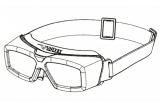
UNIVET 559 (Aluminum shield)
Extremely robust frame made of 2mm aluminum intended for the most powerful industrial lasers. Inner soft rubber lining cushions impacts and ensures a tight fit. The glasses are fixed using an adjustable elastic strap and can also be worn over prescription glasses (OTG).
Patient eye protection (medicine and cosmetics)
For medical and aesthetic procedures (dermatology, IPL, tattoo removal), it is necessary to ensure absolute protection for the treated patient, while not restricting the doctor in their work.
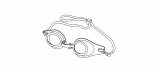
UNIVET 616 (Patient goggles)
Ergonomic cups ensure total eye protection for the patient from direct and reflected radiation. An adjustable nose bridge allows the doctor trouble-free access to the treated area on the face. Construction from durable materials allows full sterilization in an autoclave.
Do you wear prescription glasses?
If you need to wear your prescription glasses while working with a laser, it is essential to choose a model that is spacious enough (known as OTG – Over-The-Glass), one that won’t pinch you anywhere and won’t restrict your field of vision in any way.
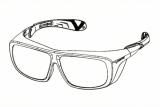
UNIVET 562 (Spacious OTG Design)
The lightweight and highly durable Sylex frame is designed to fit comfortably over most standard prescription glasses. The wide lens does not restrict peripheral vision, and the fully adjustable temples with SoftPad™ technology ensure perfect stability without uncomfortable pressure points, even when worn all day.
Are you looking for reliable protection at an affordable price?
For occasional use, hobby projects, or light professional work, you don’t always need premium frames. However, you still need certified and reliable eye protection that doesn’t compromise on safety and comfort.
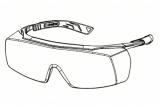
UNIVET 5X7 (Economical option with full equipment)
An ideal and practical solution that combines an affordable price with excellent ergonomics. The glasses feature wide lenses for a flawless field of view and adjustable SoftPad™ temples, making them comfortable to wear even over prescription glasses. This model also comes with a full set of accessories, including a hard case, a cleaning cloth, and a neck strap.
Frequently Asked Questions
How do I find out what safety glasses I need for my laser?
The most important thing is to know the type of laser and its wavelength. This information can usually be found on the device's rating plate, in the technical manual, or in the manufacturer's documentation. The type of laser (e.g., fiber, CO₂, Nd:YAG, or diode) directly determines the radiation wavelength against which the protective filter must be designed. Based on this value, glasses with the corresponding protection level according to the EN 207 standard can then be selected.
Are laser safety glasses universal?
No. Laser safety glasses are always designed for specific wavelengths. Glasses intended, for example, for a fiber laser (around 1064 nm) may not provide any protection against a CO₂ laser (10,600 nm) or against visible lasers in the 450–532 nm range. Therefore, it is always necessary to choose glasses according to the type and parameters of the specific laser.
What does the OD value mean for laser glasses?
OD (Optical Density) is a parameter used primarily in American laser safety standards. It indicates how strongly the filter attenuates laser radiation at a given wavelength.
For example:
- OD 3 means an attenuation of radiation power by 1,000x (lets 0.1% through)
- OD 6 means an attenuation of 1,000,000x (lets 0.0001% through).
The OD value is often used in technical sheets or in laboratory settings, but in European legislation, it is not enough on its own for the certification of safety glasses .
What is the difference between OD and LB?
In Europe, the decisive factor is the EN 207 standard, which uses the designation LB (Laser Protection Level).
LB is a more robust parameter than OD because it takes more factors into account during testing, for example:
- laser wavelength
- power or pulse energy
- exposure time
- operating mode type (continuous or pulsed laser)
While OD only expresses the degree of optical attenuation of the filter, LB confirms that the glasses will actually withstand a laser strike under defined conditions . Therefore, for normal operation in the EU, it is always key to follow certification according to EN 207.
What does the EN 207 standard mean?
EN 207 is the European safety standard for laser safety glasses intended for normal work operation.
Glasses tested according to this standard must withstand a direct hit by a laser beam under defined conditions. The lens always bears a marking containing:
- wavelength range
- protection level (LB)
- laser type (e.g., D, I, R, or M depending on the mode)
If you actively work with a laser (for example, during cutting, welding, marking, or cleaning), your safety glasses should always meet the EN 207 standard.
What is the EN 208 standard for?
The EN 208 standard is used for so-called alignment glasses, which are intended only for adjusting optical paths.
These glasses do not block the laser beam completely. They partially let it through so its path can be monitored while adjusting the optics, but at the same time they reduce the beam intensity to a safe level for short-term observation .
Glasses according to EN 208 are not intended for normal laser work operation.
Can I use normal safety or sunglasses when working with a laser?
No. Normal safety or sunglasses provide no guaranteed protection against laser radiation.
A laser beam has a very high concentration of energy and can damage the retina within a fraction of a second. Only glasses certified according to the relevant standards (for example, EN 207 or EN 208) ensure a defined level of protection.
Why do laser glasses come in different colors?
Lens color is not a safety parameter. It is only a side effect of the filtering technology used, which blocks specific wavelengths of laser radiation.
For example, a filter intended for a green laser is not necessarily green. When choosing safety glasses, always follow the filter's technical parameters and certification according to the relevant standard, not its color.
What does the abbreviation VLT mean?
VLT (Visible Light Transmission) indicates what percentage of normal visible light passes through the filter to the user's eye .
A higher VLT value means a lighter filter and better visibility of the workspace. A lower VLT, on the other hand, means a darker filter, which may be suitable for processes with very bright secondary radiation (for example, during welding or cutting).
VLT only affects visual comfort – safety is always determined by the correct filter protection level for the given wavelength .
Can I wear laser safety glasses over prescription glasses?
Yes. For this purpose, there are special models designated as OTG (Over-The-Glass). These safety glasses have a more spacious construction that allows them to be worn comfortably over normal prescription glasses without restricting the field of vision.